How To Make A Herbal Aches and Pains Balm


We have just discovered a unique ache and pain balm recipe which uses all natural ingredients and an awesome blend of herbs!
This balm should create a wonderful soothing effect that relieves the pains and aches in the body. The unique balm recipe makes use of several herbs and essential oils (some of which are listed as optional) – violet, ginger root, rosehip seed, tamanu, meadow foam seed, tei fu, blue chamomile,lavender, carrot seed, comfrey, and arnica. If you are on a limited budget, the recipe states clearly which ones are optional.


But I suggest that you don’t take out ginger root, arnica, lavender, chamomile and comfrey from the list. The essential oils derived from these herbs are known for their ability to help people suffering from pain, ache and some inflammatory conditions.
Research studies have indicated that several of these herbs may be benficial in relieving pain, swelling and aches. Comfrey, for instance, makes an excellent remedy for pain and inflammation triggered by conditions like osteoarthritis, back pain, arthritic knee pain, ankle sprains and rheumatoid arthritis.
On the other hand, arnica which comes from the family of sunflower, is a perennial plant that is known for its ability to reduce pain and swelling significantly. For centuries, arnica has been used widely to treat various types of pain. Due to its anti-inflammatory qualities, arnica is a popular herbal remedy and is often used by athletes to soothe strains and soreness. One study even revealed that it works as effectively as ibuprofen but with minimal side effects.
Ginger root is highly regarded as a wonderful treatment for pains and many types of inflammatory conditions. Recent researches revealed that ginger root extract is capable of relieving severe muscle pains. In addition to its anti-inflammatory effects, ginger root has analgesic properties that work like non-steroidal anti-inflammatory drugs minus the latter’s side effects.
Best known for their relaxing properties, lavender and chamomile also make a wonderful duo for your homemade pain balm. In addition to their pleasing aromatic scent, these herbs are known for their ability to soothe pain.
Ready to try this amazing homemade aches and pain balm? Hereis the link to the full tutorial and recipe: http://thenerdyfarmwife.com/aches-pains-balm-recipe

How to grow a lemon tree from seed (the best article)

How to grow a lemon tree from seed

When life gives you lemons, grow trees!
If you’ve ever seen a flowering lemon tree, you’ll understand why. For those of you who haven’t, allow me explain. Their lush, dark green, oval leaves have a glossy texture that shimmers in sunlight. Their delicate white flowers bloom with a citrus fragrance and are soft to the touch. Their exotic nature provides an alluring quality. And, finally, they bear the exciting possibility of fruit!
Typically, lemon trees flourish outdoors year-round in hot, sunny regions, but they can also thrive indoors as edible houseplants in cold-season climates. At the organic food store where I work we have a healthy lemon cutting producing massive fruit in a garage setting all year. It makes for an impressive sight during the dead of a Canadian winter!

This is the little tree with big fruit in the shop I work at.
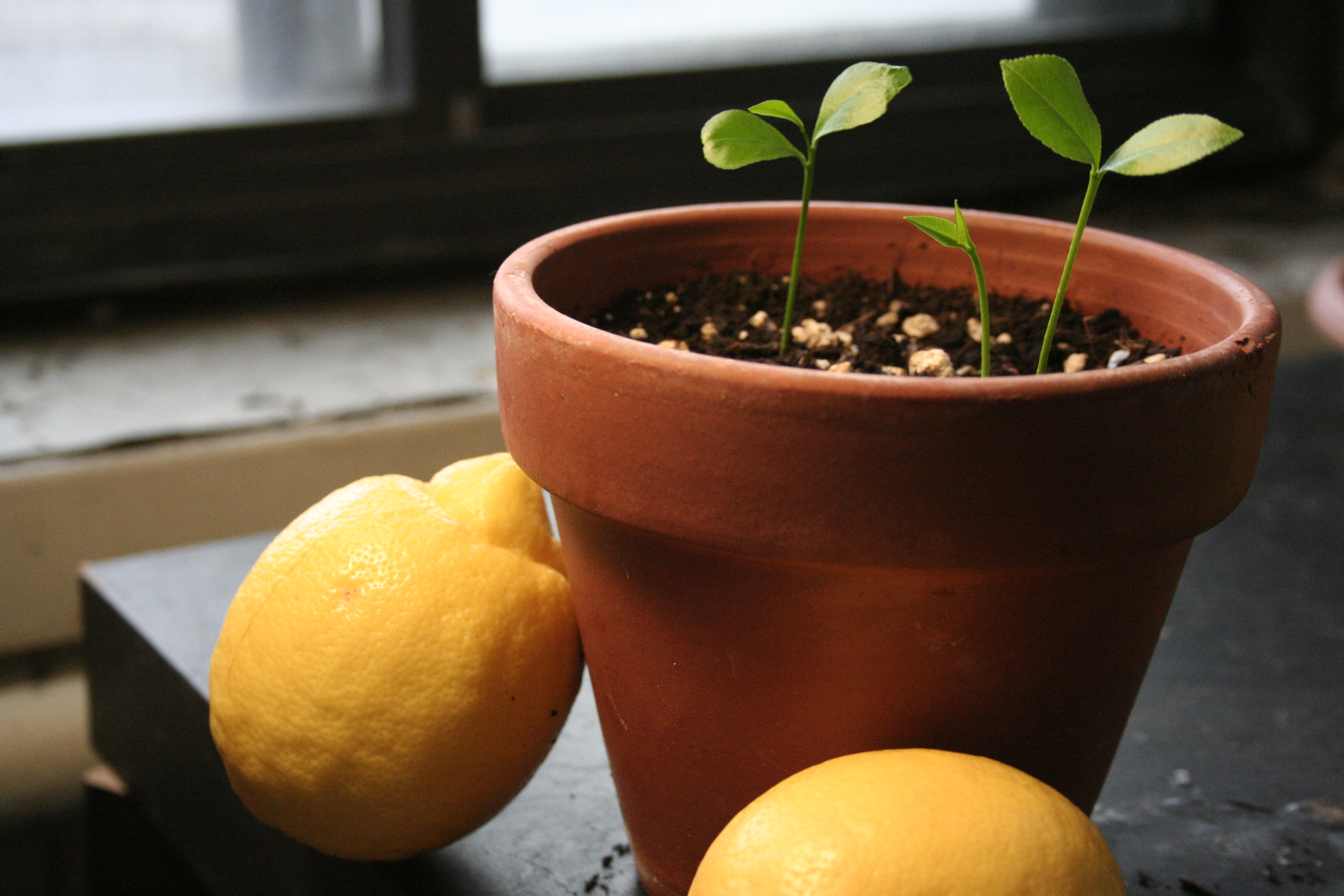
And while rooting cuttings is a sensible option for fast fruit, lemon tree cuttings are not readily available in many parts of the world. But lemons are another story. And although it may take anywhere from 3-6 years for your tree to be capable of producing fruit, there is something extra rewarding about starting from seed. I currently have six strong little seedlings on the go, all of which were germinated in the middle of winter with very little effort. Watching them grow has been an exciting and fascinating experience and I know the best is yet to come.
Here is a step-by-step guide to growing your very own lemon tree from seed:
Things you’ll need:
1. A lemon. Make sure you purchase an organic lemon since some non-organic lemon seeds may be “duds”, incapable of germinating. Any organic lemon will do, but if you have climate or space restrictions, you may want to try looking for a specific variety called a “Meyer” lemon. Meyer lemons are a smaller type of lemon, often grown for ornamental purposes, and are thus better suited for indoor containers. I chose Meyer seeds for these reasons, but you can use any seed that makes sense for your situation.

This is a Meyer lemon!
2. Potting soil. I would guess that any potting soil will do, but I suggest using one with a blend of peat, perlite, vermiculite, and organic fertilizer. Every single one of the seeds I planted in this type of certified organic potting mix have sprouted beautifully, so I think it’s fair to say that it works.
3. Container/pot. A container (with drainage holes) that is 5-6” deep and a few inches in diameter will be sufficient for sprouting; however, the seedling will need to be re-potted into a much larger container. Mature lemon trees prefer a container that is wider rather than deeper, so I suggest planting your seedling in a pot that is 10-16” deep and 12-18” in diameter. Your baby tree will happily make itself at home in this larger container for the next few years, at which time you may want to upgrade again.
4. A grow light or lots of sun. Lemon trees need a lot of light, especially when they are sprouting and require 10-14 hours of it each day. If you don’t have a consistently sunny window (like me), get a grow light. They don’t cost much and will prove their worth in healthy green foliage.
Method for sprouting the lemon seed:
1. Pre-moisten your potting soil. Put some soil into a bucket and mix in some water until the soil is damp all the way through.
2. Fill your container with the pre-moistened soil. Leave about an inch of space below the rim of your container.
3. Slice open your lemon and choose a seed that looks completely full of life. Pop it into your mouth and suck on it until all the flesh is removed and the lemon flavour is gone. Do not allow the seed to dry out at any time. It needs to stay moist in order to germinate. I suggest keeping it in your mouth until you’re ready to plant.
4. Plant your seed! While it’s moist, plant your seed about 1/2″ below the soil level. Cover it completely with soil and water well with a squirt bottle or gentle watering can.
5. Cover your container with breathable plastic to keep your seeds warm and moist. I used a piece of clear garbage bag with holes poked into it and a rubber band to securely hold it in place.
6. Place the container in a warm location and observe for the next few days. Keep in mind: your seed needs warmth and moisture in order to germinate. Don’t allow the potting soil to dry out completely. Also take caution that you don’t cook your seed in its little greenhouse. Too much heat and moisture could lead to a rotten seed! You’re aiming to achieve a nice balance, so if you feel like the soil is warm enough without the plastic then it’s probably safest to remove it.
7. In about two weeks you may notice a sprout emerging from the soil. Once it appears, remove the plastic (if it’s still on) and place the little guy in a warm location with plenty of direct sunlight. Supplement sun with your grow light if needed.

Here are my little guys one month after planting.
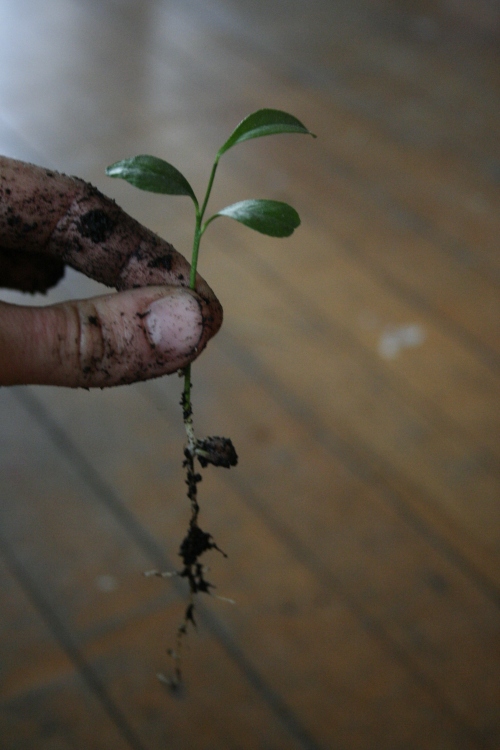
At a little less than two months old, this little guy is upgrading to a larger home.
8. Care for your new baby and watch it grow! Provide it with:
  • Water. Ensure that the soil is damp at all times, especially when your lemon tree is young. Do not allow it to sit in a puddle of stagnant water though; those drainage holes are there for good reason.
  • Sunlight. Place it in a warm sunny window where it will receive eight hours of direct sunlight each day, or supplement some sun for a grow light. Since Toronto rarely seems to get any sun in the winter, my sprouts reside in a well-lit window under the warm rays of a grow light for 12 hours each day.
  • Food. In order to keep your lemon tree healthy and growing the soil will eventually need to be replenished with nutrients. I suggest feeding it an organic fertilizer, such as compost or vermicompost, once it has developed a nice little set of leaves. Dig a little trench around the base of your tree, fill it with compost and water it well. Or, serve it up as compost tea. Try feeding it twice a year or as needed, but do not overfeed! When it comes to fertilizing, less it best; so if in doubt, put it off a bit longer. (Another option is to start your seed in potting soil with vermicompost or worm castings mixed into it).
  • Love. Spend some time looking at your new citrus friend. Pay attention to its growth. Feel it, talk to it, sing to it, but don’t try to dance with it. Get into the habit of watching for browning leaves and checking the underside of leaves for pests. Just like us, our plants can fall victim to bugs and disease and may sometimes require some extra love and affection.
source : https://growingwildceeds.wordpress.com/2012/03/10/how-to-grow-a-lemon-tree-from-seed/

How to Grow Your Own Lemon Tree From Seed (3)

Even in northern climates and in the dead of winter, a productive lemon tree can be growing inside of your home or garage. They are quite beautiful in appearance, both in regard to their dark-green leaves and their snow-white blooms, and they also emit a pleasant, refreshing  fragrance.

To grow your own lemon tree, you will need to obtain the following:
  • An organic lemon since non-organic lemons often contain non-germinating seeds
  • Fertile potting soil, preferably containing peat, vermiculite, perlite, and natural fertilizers
  • A planting pot that is six inches wide and six inches deep
  • A seedling pot that is about 24 inches wide by 12 inches deep
  • A sunny, indoor growing location and possibly a grow lamp
Follow these steps to grow your own lemon tree:
  1. Moisten the potting soil so that it is damp, but not soaked, all the way through.
  2. Fill the smaller pot with soil, all the way up to an inch below the rim.
  3. Cut open your lemon and remove a seed. Remove all of the pulp from its surface. A good way to do this is to simply suck on it until it is clean.
  4. Do not delay to plant. The seed must still be moist when it is buried into the soil. Plant the seed about half an inch deep in the middle of the pot.
  5. Spray the soil that is directly above the seed gently with water from a spray bottle.
  6. Cover the pot with clear plastic wrap, seal the edges with a good rubber band, and poke small holes in the top with a pencil.
  7. Place the pot in a warm, sunny location.
  8. Spray on more water occasionally, not allowing the soil to dry out. Do not cause water to puddle though. Just keep the soil somewhat moist.
  9. After about two weeks, when the sproutling emerges, take the plastic covering off. If you need additional light for your lemon plant, you can use a grow light to supplement the sun’s light.
  10. Take care of the young plant by keeping the soil damp, by making sure it gets at least eight full hours of light per day, and by giving it moderate doses of organic fertilizer.
  11. Watch over your plant to ensure it is not attacked by bugs or diseases. Prune off brown, dead leaves when necessary. Use pesticides if you must. Protect your new lemon tree!
  12. When the plant outgrows its small pot, put it in the larger pot. You will go through much the same procedure when you re-plant it as when you first planted. Younger plants need more water than older plants, but they all do need adequate water. Don’t starve your poor plant after all that work of growing it!
Eventually, your hard work will pay off with a fruit-bearing tree. You could have bought a lemon at the market easy enough, but the educational experience of growing your own lemons will be well worth it. You will be able to enjoy fresh-off-the-tree lemons at your pleasure, and you will have grown an excellent addition to your home decor.

How to Grow a Lemon Tree from Seed Easily in Your Own Home (2

citris

This is part 2 of 3 in a 3-part series about how you can bring certain foods into your garden at home. Some of them can be done indoors and out, it’s all up to you – the best part is, you get all the healthy benefits of organic food without the worry of any chemical contamination. If you haven’t seen part 1 about growing superfoods in your home,you can find that here. Otherwise, the next section covers ways that you can grow blood pressure-lowering, vitamin-enriching herbs in your garden.

Citrus fruits are packed full of vitamins, potassium, calcium, phosphorus, magnesium – the list goes on. Even though they may not make for a balanced meal on their own, they sure do offer a huge list of benefits that can complement the rest of our diet. At the same time, they do tend to be high in sugar – so managing how much of them you’re eating is imperative when it comes to maintaining a balanced diet.

It’s kind of funny – you need them, but you need to keep yourself from going overboard at the same time!
Certain citrus fruits are easier to grow than others, and thankfully, two of the best ones can be grown right in your yard. By growing them yourself, you’ll be able to taste the difference in freshness and quality, and keep your body free from any chemical contamination associated with non-organic growing. Not sure which two I’m talking about? Here they are:
1. Lemons
I know the first part of this series was directed towards superfoods that you can grow at home – and don’t you worry, lemon is definitely a superfood too. But at the same time, lemons are so useful for so many different things that they kind of exist in another universe on their own. Whether you’re adding them to water or making use of their peels, the convenience of growing your own lemons is not something that should be ignored.
How can you grow them?
I recommend buying a baby tree (2-3 years) to get the best results with your lemons. Pick out a clay or plastic pot (with a lot of holes in the bottom), and make sure that it’s a bit larger than the actual root ball of your baby tree (when the tree matures, it may need a pot that’s about 12-15 inches deep, and 17-20 inches in diameter) . Get your baby tree into the pot, and fill the drainage container with stones to improve air flow. Then, fill up your pot with soil. Keep in mind that some soils are specifically prepared for growing citrus fruits, so they will likely yield better results.
That’s basically all the prep you need. Make sure you’re giving it about 8-10 hours of sunlight a day, and watering regularly (be careful not to over-water). Lemons take about 6-9 months to ripen, so when they have a full color and a slight give to their touch – you’re all set.
Or you can grow one from seed. 
“To grow your own lemon tree, you will need to obtain the following:
- An organic lemon since non-organic lemons often contain non-germinating seeds
  • Fertile potting soil, preferably containing peat, vermiculite, perlite, and natural fertilizers
  • A planting pot that is six inches wide and six inches deep
  • A seedling pot that is about 24 inches wide by 12 inches deep
  • A sunny, indoor growing location and possibly a grow lamp
Follow these steps to grow your own lemon tree:
  1. Moisten the potting soil so that it is damp, but not soaked, all the way through.
  2. Fill the smaller pot with soil, all the way up to an inch below the rim.
  3. Cut open your lemon and remove a seed. Remove all of the pulp from its surface. A good way to do this is to simply suck on it until it is clean.
  4. Do not delay to plant. The seed must still be moist when it is buried into the soil. Plant the seed about half an inch deep in the middle of the pot.
  5. Spray the soil that is directly above the seed gently with water from a spray bottle.
  6. Cover the pot with clear plastic wrap, seal the edges with a good rubber band, and poke small holes in the top with a pencil.
  7. Place the pot in a warm, sunny location.
  8. Spray on more water occasionally, not allowing the soil to dry out. Do not cause water to puddle though. Just keep the soil somewhat moist.
  9. After about two weeks, when the sproutling emerges, take the plastic covering off. If you need additional light for your lemon plant, you can use a grow light to supplement the sun’s light.
  10. Take care of the young plant by keeping the soil damp, by making sure it gets at least eight full hours of light per day, and by giving it moderate doses of organic fertilizer.
  11. Watch over your plant to ensure it is not attacked by bugs or diseases. Prune off brown, dead leaves when necessary. Use pesticides if you must. Protect your new lemon tree!
  12. When the plant outgrows its small pot, put it in the larger pot. You will go through much the same procedure when you re-plant it as when you first planted. Younger plants need more water than older plants, but they all do need adequate water. Don’t starve your poor plant after all that work of growing it!”(1)

Watch YouTube Gardener Mitchell Boyle’s Technique For Growing Lemons…

Mitchell shows you how to grow all kinds of great stuff on his popular youtube channel. He has videos on growing everything from Bananas to Avocado. Even Kiwis and Pineapples.
In this video, Mitch talks about the tricks he’s discovered to grow a lemon tree from seed which he says “Works every time!”

2. Mandarins
I love mandarins because of their richness of antioxidants, calcium, magnesium, fiber, and more. They’re a good change from your regular “Florida” oranges, and it isn’t too difficult to grow them at home.

How can you grow them?
If you want to grow your tree indoors, I recommend going for a baby tree, the same way I recommended it for lemons. These baby trees just tend to have more successful growth records than starting with seeds. Prepare the pot the same way you would lemons (spacious with rocks, and drainage holes at the bottom), and give the oranges regular sunlight.
Mandarin trees are safe to grow indoors because they usually don’t grow much taller than 6 feet in height. Water them regularly but conservatively, and change the pot to a larger one once the roots grow back on themselves or poke out of your drainage holes. Pick the oranges as soon as they turn orange, because every moment after that means more and more flavor dying away.
Tip: Be careful twisting the oranges off of the tree – you want to make sure the little button at the top of the orange stays there.
So there you have it, two easy ways to get delicious citrus fruits on your table without any hassle. The final section of this series will show you how you can grow delicious herbs in your home, without having to spend extra money at the grocery store.
Source:
(1) http://blogs.naturalnews.com/grow-lemon-tree-seed/

HOW TO GROW A LEMON TREE FROM SEED EASILY IN YOUR OWN HOME

http://www.naturalhealingmagazine.com/grow-lemon-tree-seed-easily-home/


HOW TO GROW A LEMON TREE FROM SEED EASILY IN YOUR OWN HOME


We all know that citrus fruits are very rich in vitamins, potassium, calcium, phosphorus, magnesium. They also have a high content of sugar – so be careful how much of them you’re eating if you want to maintain a balanced diet.
Some citrus fruits are harder to grow than others, and thankfully, two of the best ones can be easily grown right in your yard. When you grow your fruit by yourself, you’ll be able to taste the difference in quality and freshness, and keep your body free from any chemical contamination associated with non-organic growing. Here are instructions on growing your own citrus fruits:
  1. Lemons
It is recommended to buy a baby tree (2-3 years old) to get the best results with your lemons. Buy a clay or a plastic pot (with a lot of holes in the bottom), and make sure that it’s a bit larger than the actual root ball of your baby tree (as the tree grows, it might need a pot that’s about 12-15 inches deep, and 17-20 inches in diameter) . Put your baby tree in the pot, and fill the drainage container with stones to improve air flow. Fill up your pot with soil, but remember that some soils are specifically prepared for growing citrus fruits, and it is more likely that they will give better results.
These are basically all the preparations you need. Your tree needs about 8-10 hours of sunlight a day, and regular watering (be careful not to over-water). Lemons usually need about 6-9 months to ripen, so when they have a full color and a slight give to their touch – you’re all set.
grow lemons
You can also grow one from a seed.
To grow your own lemon tree, you will need the following things:
  • An organic lemon because non-organic lemons often contain non-germinating seeds
  • Fertile potting soil, preferably containing vermiculite, peat, perlite, and natural fertilizers
  • One planting pot (six inches wide and six inches deep)
  • One seedling pot (24 inches wide by 12 inches deep)
  • A sunny, indoor growing location and possibly a grow lamp
Follow these steps to grow your own lemon tree:
  • Moisten the potting soil so that it becomes damp all the way through, but don’t soak it.
  • Fill the smaller pot with soil, all the way up to an inch below the rim.
  • Open a lemon and remove a seed. Remove all of the pulp from the seed’s surface. You can do this by sucking it until it is clean.
  • You must plant it immediately. The seed must still be moist when it is buried into the soil. Plant the seed about half an inch deep in the middle of the pot.
  • Use a spray bottle filled with water to gently spray the soil that is directly above the seed.
  • Cover the pot with clear plastic wrap, use a good rubber band to seal the edges, and poke small holes in the top with a pencil.
  • Put the pot in a warm, sunny location.
  • Occasionally spray it with water, don’t allow the soil to dry out. The soil should be kept somewhat moist, so don’t over-water it.
  • A sproutling should emerge after about two weeks. Then, take the plastic covering off. If you don’t have enough light for your lemon plant, you can use a grow light to supplement the sun’s light.
  • The young plant should be in damp soil, having at least eight full hours of light per day, and you should give it moderate doses of organic fertilizer.
  • Be careful of bugs or diseases attacking your plant. Protect your new lemon tree by pruning off brown, dead leaves when necessary, and using pesticides when absolutely necessary.
  • When the plant outgrows the small pot, put it in the larger pot. The re-planting procedure is very similar as when you first planted it. A younger plant needs more water than an older one, but they all need an adequate amount of water. Make sure that you provide it with it.
  1. Mandarins
If you want to grow your tree indoors, a baby tree is the best option, just like with the lemon tree. Baby trees tend to have more successful growth records than seeds. Prepare the pot in the same way as described for lemons (spacious with rocks, and drainage holes at the bottom), and give the tree regular sunlight.
Mandarin trees don’t usually grow much taller than 6 feet in height, and this makes them safe for growing indoors. Water them regularly but don’t over-water them, and change the pot to a larger one once the roots grow back on themselves or poke out of your drainage holes. Pick the oranges as soon as they turn orange, because otherwise they will start losing their flavor.
Tip: When you pick the oranges off of the tree make sure that the little button at the top of the orange stays there.
These two easy ways will provide you with delicious citrus fruits on your table without much work.

Diatomaceous Earth is Amazing. Here's 10 Surprising Uses...

Diatomaceous Earth is Amazing. Here's 10 Surprising Uses... HOT

Have you heard about diatomaceous earth? Diatomaceous earth is a naturally occurring product that is mined out of old lakebeds. This versatile product is completely organic and safe to use around family and pets. Be sure when choosing diatomaceous earth that you only use the organic food grade variety that is natural-milled, unheated, amorphous (non-crystalline) silicon dioxide. There are so many wonderful ways you can use diatomaceous earth and it is so easy to try. Today I am going to share the top 10 surprising uses for diatomaceous earth.

1. Natural pesticide

We’ll start with the most common use. Even if you’re generally bug friendly but don’t want them in your home, you’re in luck. Diatomaceous earth is a natural and safe repellent that deters insects from entering in the first place. Dust inside and outside of your home to repel and kill insects. Here is a list of insects many people have used diatomaceous earth to treat:
  • Cockroaches
  • Bed bugs
  • Fleas
  • Spiders
  • Ticks
  • Scorpions
  • And so many others 

2. Flea control

flea control
Diatomaceous earth can be directly applied on your dog or cat to get rid of fleas. Start at the base of the tail, moving towards the head and pushing the fur up to expose the skin. Apply diatomaceous earth with your hand and place it on the skin. Try not to get DE into your pet’s ears or eyes and remember to apply diatomaceous earth in the home to break the flea cycle.

3. Eating Diatomaceous Earth

organic smoothie
This is perhaps one of the more “Googled” terms about diatomaceous earth. Many people are interested in the potential health benefits—healthier hair, nails, skin—that come from eating DE. Other potential benefits include DE lowering blood cholesterol and the health benefits of silica (food grade DE is 85 percent silica). Remember to only eat organic food grade diatomaceous earth.

4. Garden pest control

garden pest control
Sometimes an infestation can grow rampant, to the point it becomes necessary to pull out the diatomaceous earth. The kind of pest you have in your garden generally dictates the mode of application:
Flying insects: Dust your plants with diatomaceous earth after you have watered them. Make sure you lightly spray the plants as well to help the diatomaceous earth stick. Make sure to get underneath the leaves as well. This is best done in the morning to allow the DE to dry.
Ground insects: This works especially well on slugs. Put a ring of diatomaceous earth around the plants that are actively getting chomped on. Be sure to keep any leaf out from touching to soil outside the ring of DE. You don’t want to inadvertently use a “ladder” for these pests to get on. 

5. Organic de-wormer

natural dewormer
Some pet owners want to use an alternative to a synthetic de-wormer, and they do this by adding diatomaceous earth to their pet’s food. Here are the ratios for your pet’s daily dosage:
Dogs
  • Puppies & Small Dogs: ½ tsp
  • Dog under 50 lb: 1 tsp
  • Dog over 50 lb: 1 tbsp
  • Dog over 100 lb: 2 tbsp
Cats
  • Kittens: ½ tsp
  • Cats: 1 tsp

6. Prolonged food storage

food storage
An article by the University of Minnesota states that almost all dry food is susceptible to a beetle infestation. Diatomaceous earth protects food from infestations and it keeps food dry which prevents food from clumping, germinating, or going moldy. If you have grains, legumes, beans, rice, or corn in storage then adding DE works well to keep it protected and dry.

7. Dust your chicken coop

dust your chicken coop
Many chicken keepers add diatomaceous earth to their chicken coop and chickens’ dust bath to protect their chickens against lice and mites. Even if you coop currently doesn’t have this problem, a regular regime of diatomaceous earth can prevent these problems from cropping up. 

Everyone knows green smoothies are healthy, right? However…
Have you heard of a “red” smoothie? If not, check out this true story…

8. Homemade toothpaste

homemade toothpaste
The funny thing is that lots of toothpastes already use diatomaceous earth as an ingredient because it is a mild abrasive. You can add a pinch of diatomaceous earth to your toothpaste before you brush in the morning and you’ll be surprised at how clean your teeth feel afterwards.

9. Facial cleanser

facial cleanser
If you have naturally oily skin, then mix diatomaceous earth in water until it reaches the consistency of paste. Place the paste on your face like a mask and let it rest there for at least a few minutes. Afterwards, wash it off with water. Do this no more than once or twice week because diatomaceous earth will dry out your skin.

10. Deodorizer

deodorizer
You can deodorize numerous ways using diatomaceous earth. Here are a few ways to deodorize in your home:
  • For smelly outdoor garbage, sprinkle diatomaceous earth to cover the bottom of a dry garbage can.
  • Add diatomaceous earth to your cat’s litter box by mixing in it thoroughly with a spatula or gloved hands. Coupled with its deodorizing capabilities, DE absorbs liquids twice its weight.
  • For smelly footwear, dust the bottom of each shoe with diatomaceous earth and leave it for at least eight hours.
  • Carpets absorb a lot of smells, so vacuum your carpet and then dust it with diatomaceous earth. Leave it for at least 12 to 24 hours.
I hope that you will try diatomaceous earth and see how fantastic it is for so many different uses!

How to grow wheatgrass

http://www.goodshomedesign.com/how-to-grow-wheatgrass-at-home/

The healthy properties of wheatgrass are widely known and you can buy different kinds of shakes that contain this magical ingredient. As these juices can be a bit expensive, the cheap and healthy alternative would be to grow your own wheatgrass and mix your homemade healthy shakes. But when it comes to plants, each of them has different features and it is important to know some tricks before planting and growing them. The first steps are the most important as it will determine the quality of the wheatgrass, so make sure that you soak the seeds for almost 12 hours, before planting. The sprouting period can last up to 2 and a half days and after that the seeds can be placed into the soil. The following video will help you understand the process better and will teach you how to grown your own wheatgrass. Good luck! Also, below you can find Certified Organic Wheatgrass Growing Kit- Grow 6 Amazing Trays of Wheatgrass (Reusable Trays, Seeds, Soil, Instructions)

See more at: http://www.goodshomedesign.com/how-to-grow-wheatgrass-at-home/